
Continuing the journey of new aspirations.
The country is entering a new phase of development with higher goals, requiring businesses with the scale, capacity, and ability to undertake large-scale projects in strategic sectors. After 51 years of establishment and development, PETROVIETNAM is facing the need to enhance its competitiveness, expand its scope of operations, and contribute more to the growth of the economy.
1. The Vietnam National Petroleum and Gas Corporation (the predecessor of the Vietnam National Energy and Industry Corporation - PETROVIETNAM ) was established by Decision No. 170/CP dated September 3, 1975. From its initial activities in oil and gas exploration and exploitation, over 51 years, the Corporation has gradually formed a chain of activities including gas industry, electricity, oil and gas processing, petrochemicals, fertilizers, and high-quality technical services.
It is worth noting that this expansion process is linked to the specific requirements of the economy over different periods. When the country needed resources for development, oil and gas became one of the important sources of revenue. As energy demand increased, PETROVIETNAM expanded into gas and electricity, supplementing the supply for the system. As the need to enhance the value of resources, become more proactive in essential products, and develop domestic industries became clearer, the Group continued to develop the fields of oil and gas processing, petrochemicals, fertilizers, and high-quality technical services.

Over 51 years, PETROVIETNAM has gradually developed a chain of operations encompassing gas industry, electricity, petroleum processing, petrochemicals, fertilizers, and high-quality technical services.
Therefore, PETROVIETNAM's operations are increasingly linked to many economic sectors and major national balances. By the end of 2025, PETROVIETNAM will have consolidated total assets exceeding 1 trillion VND, equity capital exceeding 556 trillion VND; contributing an average of approximately 160 trillion VND to the state budget annually in recent years; and achieving the highest profit, reaching 316 trillion VND during the 2020-2025 period, equivalent to an average of 2.2 billion USD per year.
PETROVIETNAM is also the only enterprise to have won and received numerous prestigious awards in science and technology , including 6 Ho Chi Minh Awards and 4 State Awards, along with many reputable international inventions. Notably, it is the leading enterprise in achieving the highest level of social welfare activities, having spent over 5.13 trillion VND on community programs during the 2020-2025 period alone.
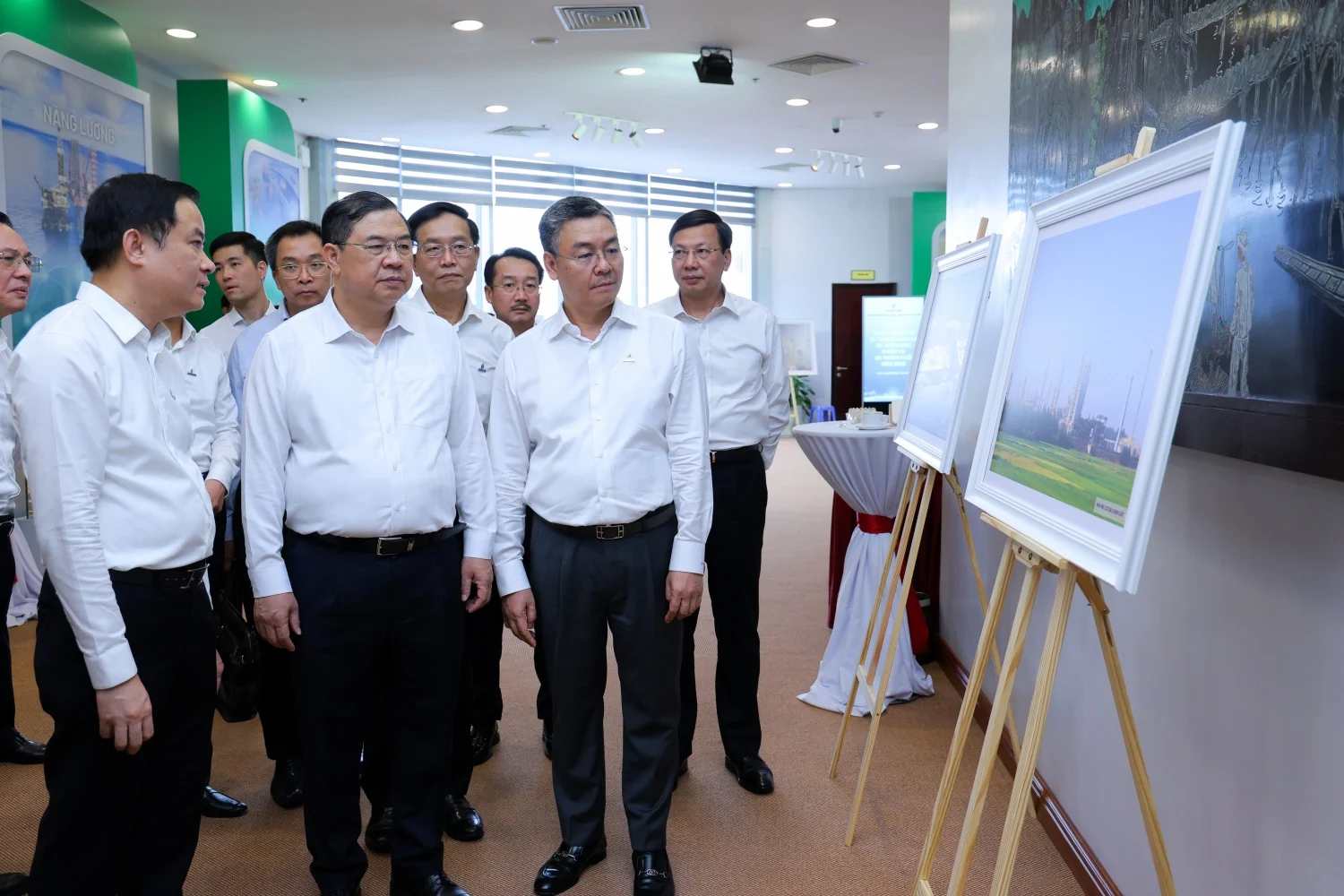
Deputy Prime Minister Pham Gia Tuc visited the exhibition space showcasing images and outstanding achievements of PETROVIETNAM.
In the first six months of 2026, the Group's total revenue is estimated at VND 734.7 trillion, a 49% increase compared to the same period last year; consolidated revenue reached VND 445.4 trillion, a 39% increase and exceeding the plan by 22%; tax contributions to the state budget are estimated at VND 88.9 trillion, a 27% increase. Production reached nearly 8.7 million tons of oil equivalent, an 11.4% increase; reserves increased by 8.3 million tons of oil equivalent. Electricity production reached 20.46 billion kWh, a 23.1% increase.
|
“Given PETROVIETNAM’s current scale, even a 1% increase in the Group’s growth would create significant value for the overall economic growth. Therefore, the Group needs to develop a specific action plan, individualize responsibilities at each management level, unit, and individual; and monitor progress weekly and monthly to ensure the achievement of the set goals.” Comrade Pham Gia Tuc Member of the Politburo , Standing Deputy Prime Minister of the Government |
These figures reflect not only the scale but also PETROVIETNAM's ability to maintain production capacity amidst pressure from market fluctuations and the natural decline of some key mines in many core sectors. At the same time, they provide a basis for understanding the Group's role in ensuring the supply of essential energy, fuel, and materials for the economy.
2. The country is aiming for higher growth rates, increased productivity, competitiveness, and economic self-reliance. Meanwhile, the energy market is volatile, energy transitions are intense, technological competition is increasingly fierce, and global supply chains are constantly changing.
Given its current scale and stature, the challenges facing PETROVIETNAM in the coming period will be significantly greater. The Group needs to continue enhancing its capacity as a national industrial and energy corporation. Its scale must meet the requirements for implementing large-scale projects; its financial, technological, and managerial capabilities must be competitive regionally and gradually expand internationally. Resources need to be focused on areas capable of creating long-term value, linked to energy security and the country's development needs.
Resolution No. 79-NQ/TW of the Politburo on the development of the state-owned economy sets the goal that by 2030, 50 state-owned enterprises will be in the Top 500 largest enterprises in Southeast Asia, and 1-3 enterprises will be in the Top 500 largest enterprises in the world ; 100% of state-owned corporations and general companies will apply governance principles according to OECD standards.
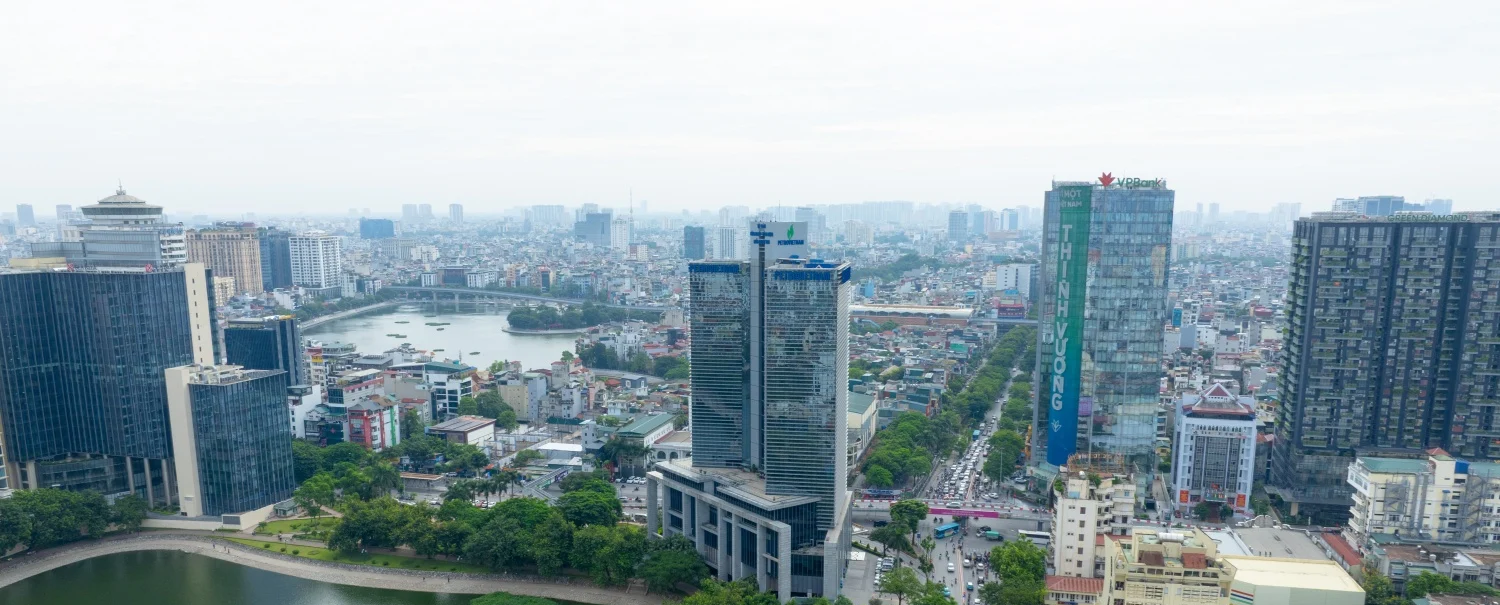
Resolution No. 79-NQ/TW of the Politburo on the development of the state-owned economy sets the goal of 100% of state-owned corporations and enterprises applying governance principles according to OECD standards.
For PETROVIETNAM, this requirement lies primarily in the capacity to implement large-scale projects with long-term investments and impacts across multiple sectors. Enterprise size is only meaningful when coupled with efficient capital utilization, quality management, and the ability to generate new production capacity.
This also necessitates increasing value at every stage of the oil and gas-energy chain. Resources need to be exploited more efficiently and processed more deeply; projects must increase their technological content and create linkages with domestic businesses.
An energy project doesn't just generate its own output. It also creates demand for mechanical engineering, construction, transportation, logistics, finance, and technical services. If Vietnamese businesses can participate more in these areas, the impact of a project will extend beyond the scope of PETROVIETNAM alone.
In this context, ensuring energy security remains a top priority. Electricity, gas, and fuel are inputs for production, infrastructure, and daily life. New sectors such as high technology, data centers, and green manufacturing also require a stable electricity supply and suitable energy infrastructure.
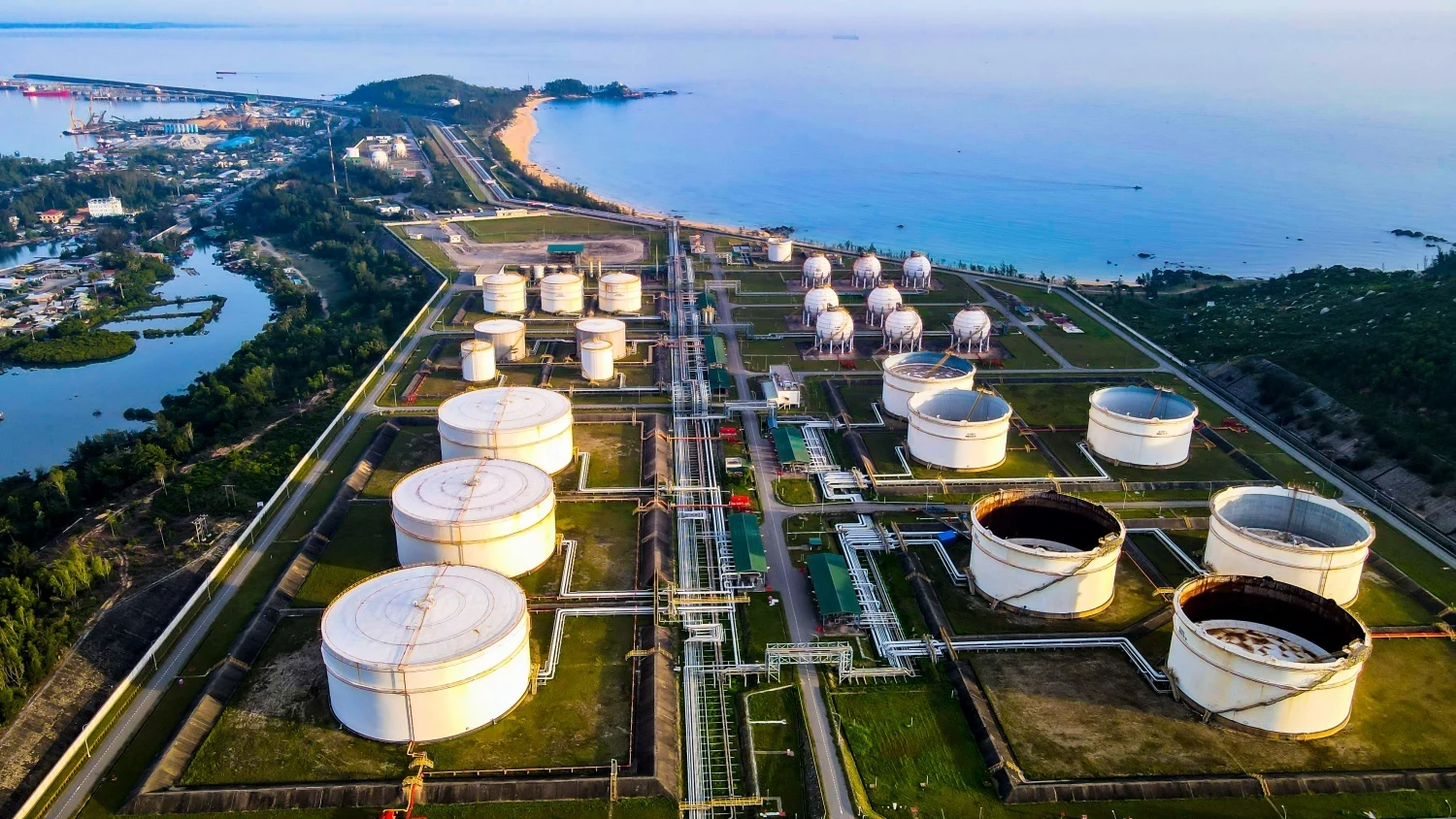
In accordance with the direction set out in Resolution No. 70-NQ/TW, PETROVIETNAM needs to continue developing the fields of gas, electricity, and petroleum processing.
In accordance with the direction set out in Resolution No. 70-NQ/TW, PETROVIETNAM needs to continue developing the fields of gas, electricity, and petroleum processing; while simultaneously researching and appropriately participating in new energy fields, carbon capture and storage, and high-tech industries.
Technology will be a decisive factor in the development potential of these fields. For PETROVIETNAM, the requirements for science, technology, and digital transformation are directly linked to production activities, from exploration and exploitation in areas with complex conditions to processing and operation of energy facilities.
In accordance with Resolution No. 57-NQ/TW, research, application, and mastery of technology should be linked to building a highly specialized workforce, improving productivity, controlling costs, and ensuring safety in operation.
International integration has also become part of the process of enhancing competitiveness. Resolution No. 59-NQ/TW requires Vietnamese enterprises to participate more deeply in global value chains. For PETROVIETNAM, this is linked to expanding cooperation, accessing technology, capital, and markets, while simultaneously improving management capacity and the quality of human resources.
Another crucial factor is the institutional framework. Oil and gas, energy, and industrial projects typically involve large investments, long implementation periods, and multiple management areas. Clear, stable, and consistent regulations will help reduce preparation time, increase business initiative, and bring resources into production sooner. This is one of the key points outlined in Resolution No. 66-NQ/TW on reforming the work of lawmaking and enforcement.
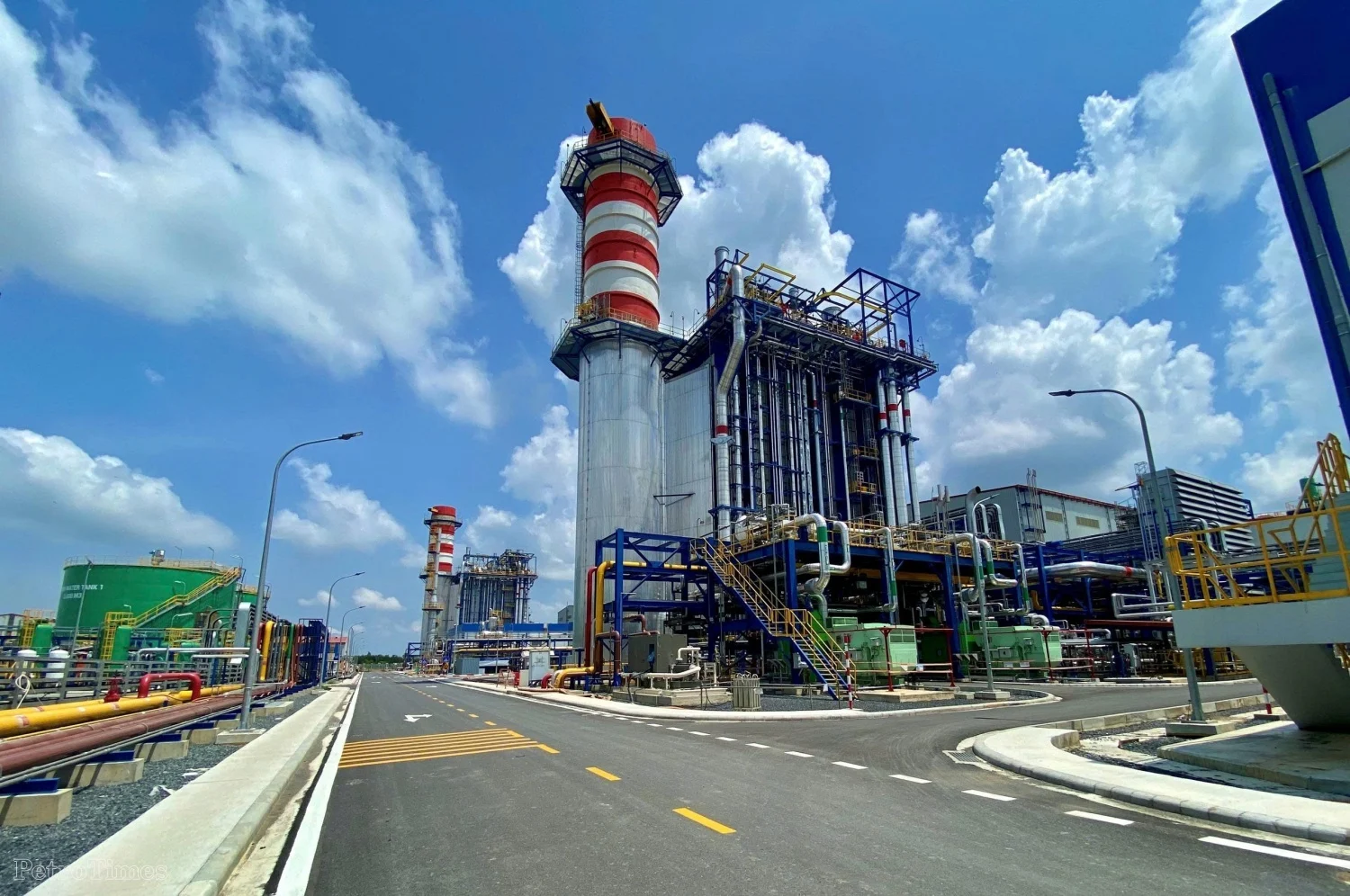
Nhon Trach 3 and Nhon Trach 4 LNG power plants.
Furthermore, PETROVIETNAM can create more space for private enterprises through its supply chain. In line with Resolution No. 68-NQ/TW, expanding the participation of domestic enterprises in projects, equipment supply, services, and supporting industries will both provide the Group with more suppliers and create markets and accumulate capacity for the private sector.
Overall, the Party's strategic resolutions set forth requirements for the development and enhancement of PETROVIETNAM's implementation capacity. In particular, governance is crucial for the effective use of resources. Investment decisions need to be based on efficiency and risk management; capital should be allocated in line with the strategy; and assets, technology, human resources, and supply chains should be managed more tightly. The capacity to prepare and execute large-scale projects also needs to be improved accordingly.
3. After 51 years, PETROVIETNAM has accumulated a significant scale of resources, experience, and technological capabilities. This is the result of many generations of workers and of a development process linked to the specific requirements of the country.
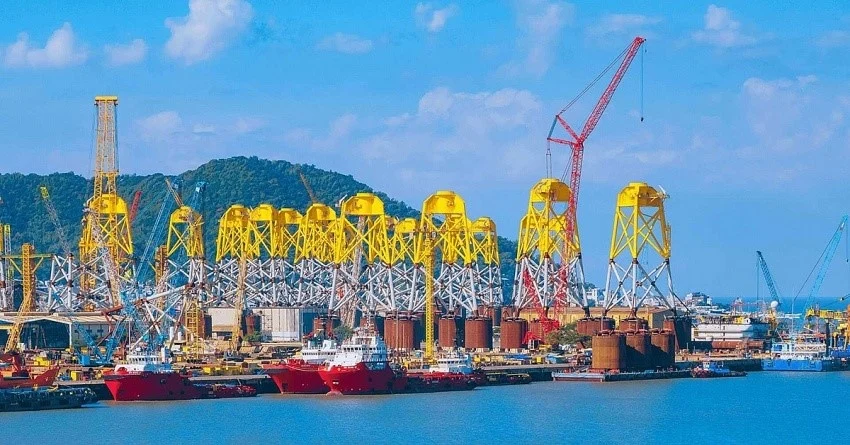
Fabrication of offshore wind turbine foundations at PTSC Energy and Logistics Engineering Center.
The next phase will present a different requirement: transforming accumulated resources into new development capabilities. This includes the ability to undertake larger projects, increase the proportion of processing and technology, develop domestic supply chains, and participate more deeply in regional and international value chains.
From an external perspective, the significance of a larger PETROVIETNAM therefore lies not only in revenue, assets, or rankings. More importantly, it is about its ability to create additional capacity for the economy: more energy sources, more industrial capacity, more technology, and more markets for domestic businesses.
51 years is a milestone in the journey so far. The value of the next phase will be determined by what PETROVIETNAM can create from its existing resources and its ability to meet the new demands of the economy.
It is a journey where scale must go hand in hand with efficiency, capability must go hand in hand with management, and the Group's development must be linked to specific values for the economy.
vietnam.vn/en