From lessons learned from supply chain disruptions to proactive thinking.
During a recent meeting between Mr. Le Manh Cuong, General Director of Vietnam National Energy Corporation ( Petrovietnam ), and Mr. Atsuhiko Hirano, Deputy General Director of Idemitsu Kosan Group - one of Japan's largest energy companies and a key shareholder of Nghi Son Refinery and Petrochemical Complex (NSRP) - the two sides agreed to continue promoting cooperation to ensure the stable operation of the Nghi Son Refinery and Petrochemical Complex and maintain energy supply for Vietnam.
During the meeting, Mr. Atsuhiko Hirano expressed his gratitude to Petrovietnam for its active support in ensuring the supply of crude oil for NSRP over the past period. In the context of the global energy supply chain being significantly impacted, Petrovietnam and its partners have proactively sought solutions to diversify the raw material supply for the Nghi Son Refinery and Petrochemical Plant.
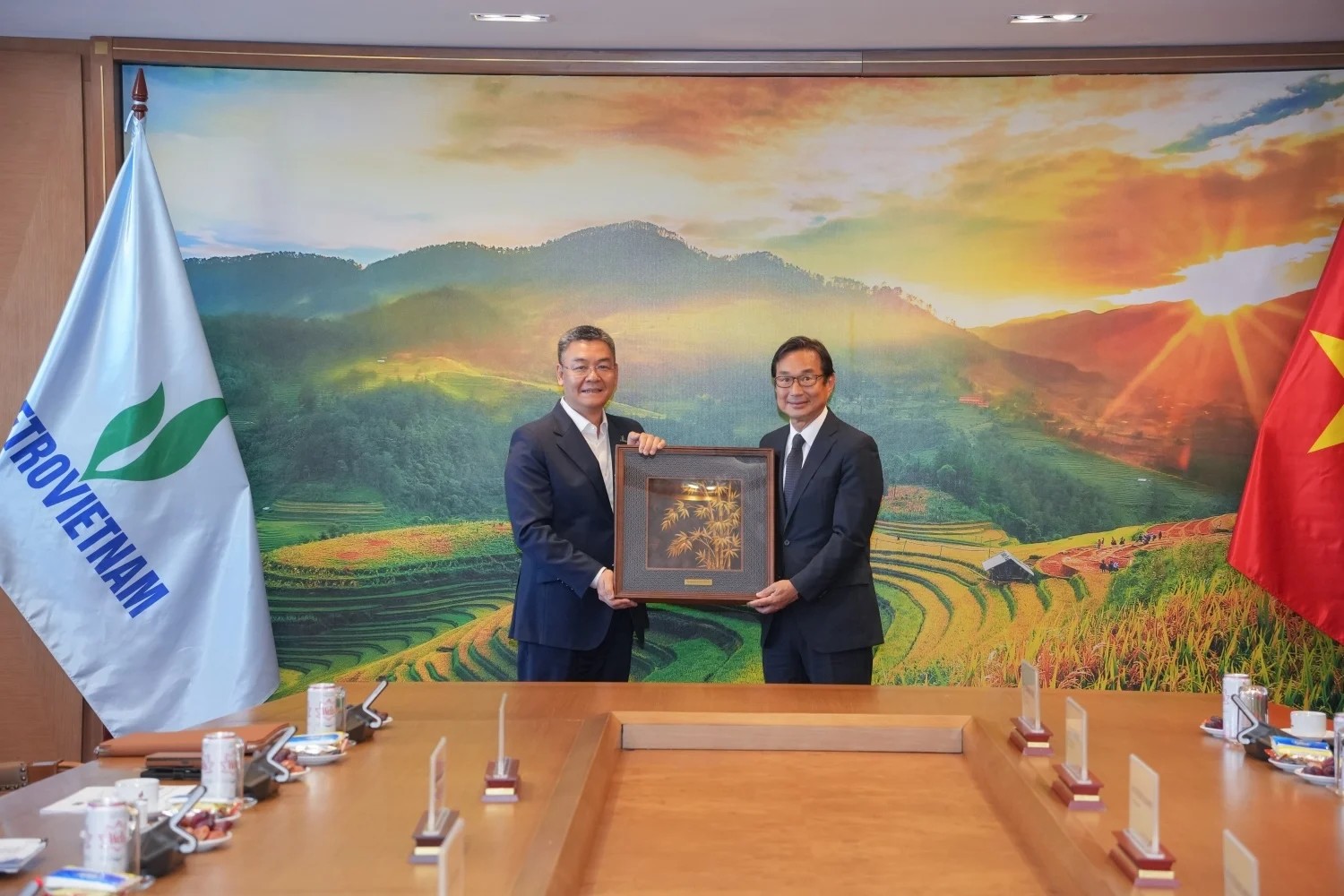 Mr. Le Manh Cuong, General Director of Petrovietnam, and Mr. Atsuhiko Hirano, Deputy General Director of Idemitsu Kosan - Photo: Petrotimes.
Thanks to close coordination between all parties, along with the support of the Vietnamese and Japanese governments , NSRP has gradually maintained stable operations, increasing its operating capacity to 120%, thereby making a significant contribution to ensuring the supply of petroleum products to the domestic market.
At first glance, this appears to be a typical collaborative activity between shareholders. However, in the context of a constantly fluctuating global energy market, maintaining consensus and close coordination among partners is crucial to the plant's continuous operation.
Behind those meetings lies an effort to keep a crucial link in the national energy system running smoothly.
Amidst escalating tensions in the Middle East, the Strait of Hormuz – a shipping lane considered the "energy valve" of the globe, with approximately 20% of the world's traded oil passing through it – has become a focal point of attention for the energy market. Even a small disruption there can destabilize the global oil and gas market, and Vietnam is not immune to these impacts.
In particular, with the Nghi Son Refinery and Petrochemical Plant – which supplies approximately 35-40% of the domestic fuel demand – any fluctuations related to crude oil input can directly affect the domestic energy market.
For many years, Nghi Son primarily used Kuwaiti crude oil – a feedstock designed to suit the plant's technological configuration. This optimized operational efficiency but also meant the plant was heavily dependent on a single supply source.
As instability emerges in the Middle East, the risks of this dependence become even more apparent. Therefore, NSRP's repeated testing and successful processing of new crude oils such as Das Blend and Djeno are not simply technical achievements.
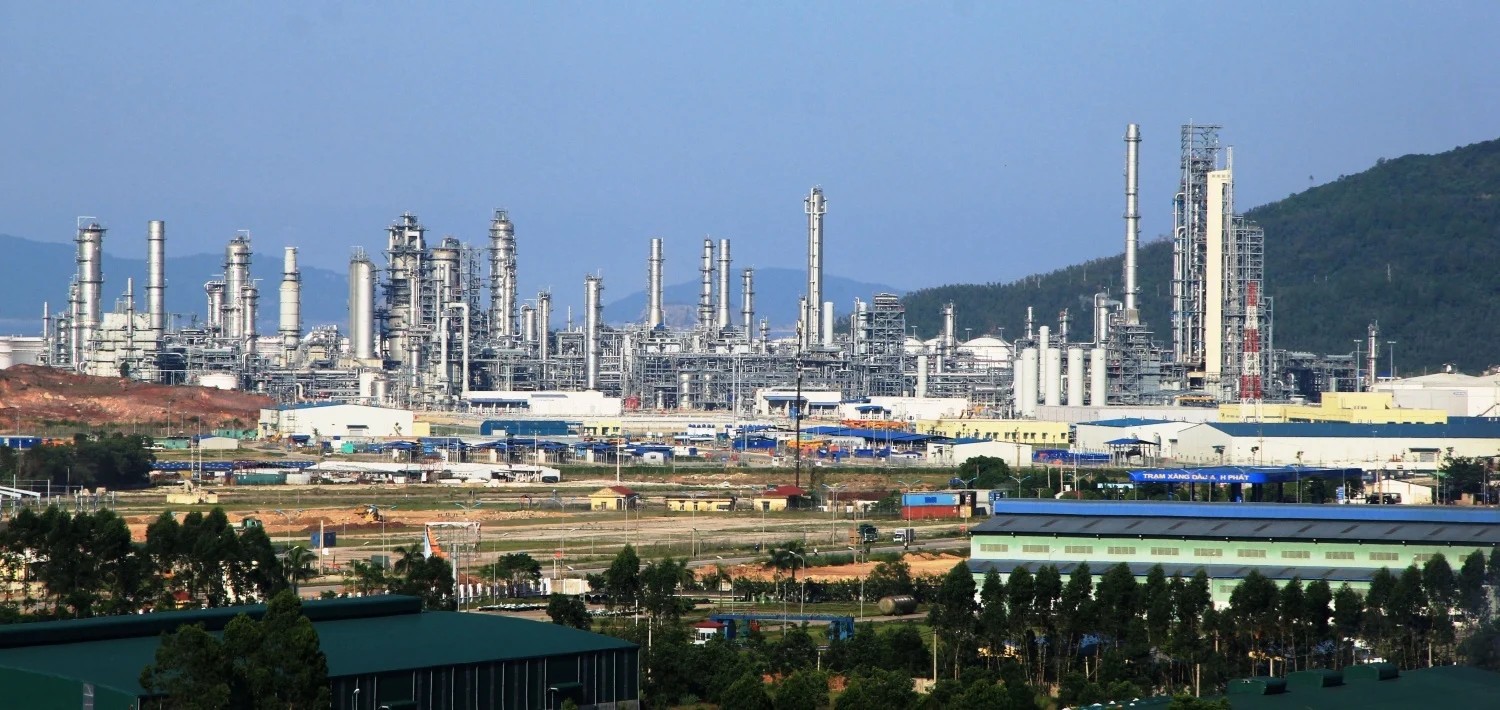 A view of the Nghi Son Refinery and Petrochemical Complex. Photo: Petrotimes.
This is a strategic move aimed at increasing the plant's flexibility, reducing its dependence on a single supply source, and expanding its access to the global crude oil market.
While previously, ensuring supply to Nghi Son mainly revolved around maintaining the plant's operation, recent geopolitical developments have placed a much higher demand: building resilience against external shocks.
That is also why Petrovietnam has continuously implemented various solutions to strengthen the supply chain for Nghi Son, from enhancing cooperation with strategic shareholders to expanding crude oil input sources.
More importantly, Petrovietnam has also begun to shift from a mindset of dependence on a single source of raw materials to a mindset of diversifying its supply sources.
Diversifying supply sources to strengthen energy security.
If diversifying crude oil sources is the first step, then proactively seeking and securing supply is the next step.
In mid-May 2026, Nghi Son Refinery Products Distribution Branch (PVNDB), a unit of Petrovietnam, worked closely with PVOIL Singapore and Idemitsu Kosan in sourcing and arranging additional crude oil shipments, contributing to maintaining the Nghi Son Refinery and Petrochemical Plant at high capacity.
As a result, the Djeno oil shipment, with a volume of over 950,000 barrels, originating from the Republic of Congo, was transported to the NSRP port and unloaded on May 15, 2026.
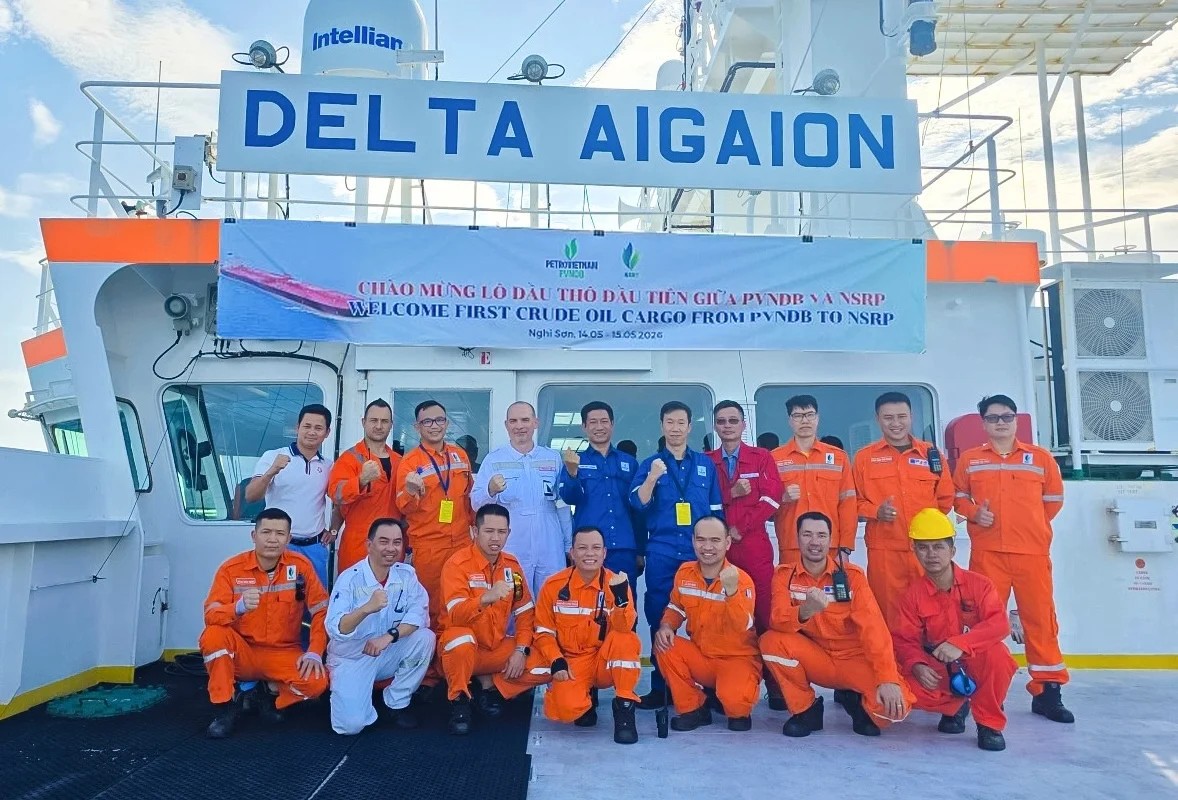 The Djeno oil shipment, totaling over 950,000 barrels and originating from the Republic of Congo, has arrived at the NSRP port. Photo: Petrotimes.
This event has significance that goes beyond the commercial value of a shipment. For the first time, the Petrovietnam ecosystem clearly demonstrates its proactive role in sourcing, arranging, and securing raw materials for the plant, instead of relying entirely on traditional supply channels.
This indicates that Nghi Son's supply chain is expanding in a more flexible, diversified direction, and is better able to adapt to geopolitical changes.
In parallel, NSRP and PVNDB also established a regular coordination mechanism to closely monitor developments in the international oil and gas market and develop response scenarios for various levels of risk.
This is especially important in the context of current fluctuations that stem not only from market supply and demand but also from unpredictable geopolitical factors.
When a strategic shipping lane is disrupted or a major oil-producing region experiences conflict, the response time will determine the ability to maintain supply.
Thanks to synchronized solutions, the Nghi Son Refinery and Petrochemical Plant maintained high operating capacity during the first months of 2026 and proactively ensured sufficient crude oil supply for production.
This was not an easy result, given that many energy markets around the world are still facing prolonged uncertainties.
But perhaps the greatest value lies not in the fact that the plant has maintained its production capacity.
More importantly, Petrovietnam is gradually building a multi-layered defense system for its energy supply chain.
The first layer is the support of strategic partners. The second layer is the ability to diversify raw material sources. The third layer is the capacity to proactively arrange crude oil supplies. And the final layer is a flexible coordination mechanism to respond to crisis scenarios.
Following the costly lessons of global supply chain disruptions in recent years, energy security is no longer measured by the number of factories or production output, but by the ability to maintain a continuous flow of raw materials even when the world faces instability.
In this context, what Petrovietnam is doing for NSRP is not only aimed at ensuring the operation of a refinery, but also at keeping the energy flow of the economy uninterrupted in the face of external challenges.
Source: https://baodautu.vn/da-dang-nguon-cung-cho-loc-dau-nghi-son-dam-bao-an-ninh-nang-luong-dat-nuoc-d620630.html